Florida Fire Watch Requirements: When You Need One

Most fire watch calls we get start the same way: a fire alarm panel is showing a fault, a sprinkler contractor just shut a riser down for repairs, or a fire marshal walked a job site and said the word "impairment." Whoever made the call usually doesn't know yet whether they legally need a fire watch, how fast one has to start, or who's allowed to run it. This is the short version.

What Actually Triggers a Fire Watch in Florida

Florida enforces fire safety through the Florida Fire Prevention Code, which adopts NFPA 1 and NFPA 101. Under those codes, a fire watch gets triggered when a building's fire protection can't do its job for a period of time. The situations we see most often:

  • Fire alarm system impairment. If a required fire alarm system is out of service, the authority having jurisdiction (AHJ), meaning the local fire marshal or fire department, generally expects notification, and a fire watch is one of the accepted ways to keep the building occupied while it's down. A common threshold you'll hear cited is impairment lasting 4 hours or more in a 24-hour period, though the exact call is the AHJ's.
  • Sprinkler or standpipe system out of service. Same logic: if the water-based suppression system a building depends on isn't working, whoever has jurisdiction can require continuous, documented patrols until it's restored.
  • Hot work. Welding, cutting, or grinding, especially on active job sites, routinely requires a fire watch during the work and for a period afterward as part of the hot work permit.
  • Overcrowding or blocked egress at an event. Venues that exceed occupancy limits or have compromised exits can be required to post a fire watch until the condition is fixed.
  • Active construction and demolition. Standpipes aren't always live yet, fire separations are incomplete, and there's more combustible material on site than the finished building will ever have again. Fire marshals treat active construction differently than an occupied, code-compliant building.

None of this is one-size-fits-all. The code gives the AHJ latitude to decide whether a fire watch, an evacuation, or another compensating measure fits the situation, so the fastest way to get a straight answer is a call to your local fire marshal's office, not a guess.

Who's Actually Allowed to Run One

A fire watch is a security function, not a favor from whoever's on site that day. It needs to be performed by trained personnel from a licensed, insured security agency, someone who knows what they're watching for and can produce a defensible log if the AHJ asks for one later. We hold Florida security agency license #B12000275 and run fire watch as one of our core fire watch services, separate from general patrol work.

That distinction matters more than it sounds. An unlicensed guard standing near a panel isn't a fire watch. If the AHJ finds out the personnel weren't qualified, the building can end up right back where it started, out of compliance, except now with less goodwill from the inspector.

What a Fire Watch Actually Looks Like On Site

A real fire watch isn't someone sitting in a chair. It's a continuous, documented patrol built around the specific hazard the AHJ flagged:

  • Regular rounds. Route and frequency come from the approved fire watch plan, but 15 to 30 minute rounds are typical for most impairment situations.
  • A hazard-specific checklist. Watching the area around the impaired system, checking for ignition sources, confirming exits stay clear, and knowing where the nearest working extinguishers and pull stations are.
  • A written log. Time-stamped entries for every round, plus anything unusual, are what the AHJ actually wants to see if they follow up. No log means no proof the watch happened.
  • A direct line to the fire department. If something does go wrong, the person on watch needs a way to notify the fire department immediately, not after finding a supervisor first.

What Happens If You Skip It

Running a building or job site without a required fire watch isn't a paperwork problem, it's the AHJ's call on whether the space is safe to occupy at all. Depending on the situation, they can require the space evacuated, work stopped, or the building closed until the impaired system is restored or a compliant fire watch is in place. On an active construction site, that can mean a shut-down crew standing around waiting on a security decision instead of working. A fire watch is almost always the cheaper option once you account for the cost of downtime.

Fire Watch on Construction Sites

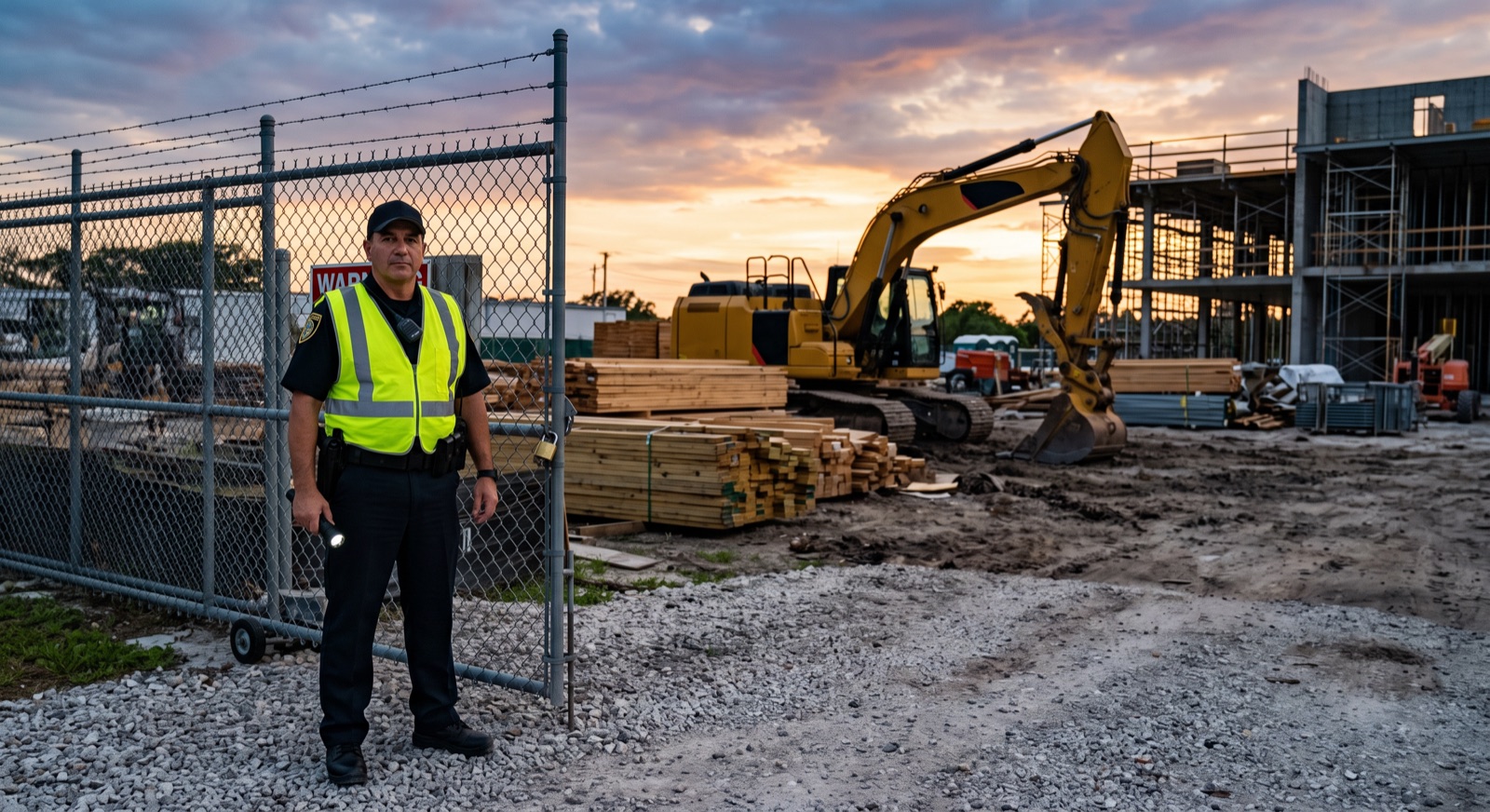
Construction is where we see fire watch needs come up fastest, and it overlaps directly with the construction site security work we already do on most active job sites. Standpipes that aren't pressurized yet, fire alarm systems not fully commissioned, hot work happening daily, and a site full of combustible packaging and debris all raise the odds that a fire marshal walkthrough turns into a fire watch requirement on short notice. Because we're often already running site security, adding fire watch coverage doesn't mean bringing in a second unfamiliar company, it's the same licensed team, extended to cover the specific hazard.

Getting a Fire Watch Started Fast

Fire watch situations are almost always time-sensitive. A fire marshal doesn't wait a week for you to schedule coverage, and neither should you. If you've been told a system is impaired, a permit requires it, or an inspector flagged an issue on site, the practical next step is a same-day call, not a quote request that sits in an inbox.

We provide licensed fire watch coverage across Florida and staff it fast when a building or job site is on the clock. If you need to know whether your situation requires a fire watch, or you already know it does and need someone on site, call us at 727-940-7926 or request a quote through our security guard services team.


Open questions for review:

  • The "4 hours in 24" impairment threshold is a commonly cited NFPA/AHJ benchmark, not a fixed Florida statute number I could verify against the state code text directly. The article hedges this correctly ("a common threshold you'll hear cited… though the exact call is the AHJ's") but Jake/Mihai should confirm this matches how ESS actually quotes it to prospects before publishing.
  • No specific fine or citation dollar amounts are used anywhere in the piece since none could be sourced reliably. If ESS has real, citable penalty data from a specific Florida jurisdiction, it could strengthen the "What Happens If You Skip It" section.
  • Word count: ~1,214 words, inside the skill's 1,200-1,800 target. No ESS Global word-count precedent exists yet beyond article 1 (estate security assessment); treat this as the second data point rather than an established range.

Why continue to train?

Why continue to train ?

ESS GLOBAL CORP. has a core value of Excellence.  It means, “the quality of being outstanding or extremely good.”  We continue to get better when we forge ourselves in the fires of training.  Whether physical or mental training, the body must be re-calibrated to perform at its best.

“What you aim at determines what you see.”

Peterson-


Do you Need to train ?

ESS ACADEMY SEPTEMBER’S COURSE FOR COMBAT PISTOL  & THRID PARTY SHOOTING HAS BEGUN!

This week kicks off September’s combat pistol and Third Party Shooting.  This class has received rave reviews from so many of our students. One of our personal favorites :

Colonel Myron Fonsake,  “I learned more in this three days of shooting than in a career in Law enforcement and Military Services.”

This course will challenge any shooter and any skill level. We focus on the basics and drill the fundamentals until they become muscle memory.  This course gets proven results.  We give a test at the beginning of the course and  re-test at the end of the course and 92% of people have dramatic improvement.

Look forward to training with you soon!

  ESS ACADEMY COURSES

Class G Security License Training in Tampa

Class G Security License in Tampa September 24-26   – ESS Global offers the only D.O.E. Approved Class G Security Training in Florida.  Class “G” licensed armed security officers are required to complete 28-hours of classroom and range instruction under the direction of a Class “K” licensed instructor over a 3-day period.

Class G Security License Training September 24-26

Class G Security License Training in Tampa SEPTEMBER
To work armed security in Florida, you are required to complete the Florida Statewide Firearms License Course. The ESS Global Corporation, Department of Education approved Florida G License Classes in Tampa is the best way to acquire the required firearms training course you must complete to work as an armed security guard.
G License Training in Tampa sept
As stated in the Florida Private Investigator Handbook, an applicant for a Florida Class “G” Statewide Firearm license must have a minimum of twenty-eight (28) hours of range and classroom training within the past (12) months.  This training must be taught and administered by a Class “K” Firearms Instructor.
G License Training in Tampa SEPT
In addition to lesson instruction and live fire training, you will be walked through the State application step-by-step to ensure that the Class “G” license application is complete and filled out properly.
Students that pass the final exam and range qualification will be given a proof of completion certificate to provide to the State when they apply for the Class “G” license.
Graduates that are issued a Florida Class “G” license must return once per year to complete annual re-qualification to retain their license. ESS has you covered there as well.

G Security License in Tampa Bay at ESS Global Corp

G Securoty Training in Tampa
There are many security jobs that often hire armed security officers such as 24-hour retail, healthcare, banking, jewelers, artwork and protection of money or valuable objects which are targets for armed robbers.
These jobs are higher paying and when they are available here in Florida, you must possess a valid “G” Security License.
It’s also important to note that you must also either currently have a valid D Security License or have taken a D training course and are awaiting the hard copy.

See All Our Upcoming Security Classes

Have Questions?

727-940-7926

info@essglobalcorp.com

Combat Pistol Training in Tampa

Combat Pistol Training in Tampa May 18-19  – Don’t neglect real world training for real world situations that can (and do) occur.

Combat Pistol Training in Tampa May 18-19

What is the value of training at an indoor range when you can’t draw from your holster and shoot multiple targets? (that’s OK, home intruders never come in groups of 2-3 or more, right?)
What is the value of training at an outdoor range where you can’t shoot from cover or even a prone position? Or even shooting while moving and seeking cover?
Oh wait….those are realistic scenarios. 
If your pistol comes out when you are not at the range, it’s likely serious and it’s very likely it’s all happening at once and you aren’t prepared because you haven’t trained for the clear and present danger at hand.

But now you can.

Combat Pistol Training in Tampa MAY
If you have purchased a handgun for self defense, learn how to use it to defend yourself.
Become proficient in defensive use of the pistol for a wide variety of circumstances, from home defense, concealed carry techniques, pistol defense in a vehicle, shooting on the run, facial recognition, ambush scenarios, body armor drills, malfunction drills and much more.
Unlike shooting at the shooting range, you move. You run. You shoot while moving.
All while shooting as the training progresses quickly into an emphasis on applying more advanced techniques under more difficult real-life situations.
Combat Pistol Training in Tampa MAY
This class will prepare you for real world confrontations and is ideal for anyone who has completed a CWP class, G License Training, or our Basic Pistol Class and wishes to learn how to effectively deploy a firearm for the purpose of self defense.
This course now includes the FBI Model with dry fire and airsoft weapons.

This Combat Pistol Training includes additional drills, and live fire malfunction clearance drills. We will begin with a review of the topics and fundamentals of marksmanship and move into more advanced drills.  You will continue to improve your pistol handling skills while reinforcing the fundamentals of marksmanship. Timed drills will help you learn the balance between speed and accuracy.

At the end of the day, the simple truth is the individual who prevails in armed conflict is the one who can most quickly adapt to the rapidly unfolding situation before them.

This training is a “must have” for armed security (G License – Executive Protection) as well as citizens looking to protect themselves, their loved ones, and their communities.
Tuition – $550.00
This class will fill quickly.
Register Today

727-940-7926

Close Protection Training – Accepting GI Bill® Benefits

Update — historical announcement: ESS Academy is pursuing accreditation and VA approval; GI Bill® benefits are not yet available for our programs. For current program and payment information, contact ESS Academy.

Close Protection Training – Accepting GI Bill® Benefits March 1-28  While some may call you a bodyguard, we prefer Executive Protection. 

Close Protection Training

If you have read our in-depth EP Guide highlighting everything you need to know about working in the close protection security industry, we have two courses to fit your needs.
There is a Fast Start 3- Day Training that some use as a refresher course, and a 28-Day MEGA Executive Protection Class for those that are serious about a career in the Close Protection Industry.
Both these classes are Florida D.O.E. Approved and both accept GI Bill® Benefits.

Our ESS Global 3-Day Fast Start Executive Protection Training is designed for career veterans as a “refresher”, or a “must-have” for beginners in the world of executive/close protection. This D.O.E. Certified Executive Protection Training gives you a strong start in the security industry covering city, county and state government organizations, corporate security services, security agencies and private individuals.
For those that are serious about beginning a new career…

The ESS 28-Day Executive Protection MEGA Training

Close Protection Training – Accepting GI Bill® Benefits

The ESS Global 28-Day Executive Protection “Mega” Course is a series of comprehensive protection training modules developed by ESS Global and approved the Florida D.O.E. This month-long executive protection training is for civilians, law enforcement and military personnel who wish to pursue a career in corporate security or protective services domestically or abroad.

The ESS Global “Mega” Executive Protection Training includes;

  • Executive Protection Certification
  • Advanced Executive Protection Certification
  • Threat Assessment & Security Advance Tactics Certification
  • Motorcade Tactics Certification
  • Defensive Tactics Certification
  • CPR/AED Certification
  • Florida Concealed Weapons Certification (May be used to obtain CWP license)
  • Firearms Safety/Dry Fire Training and Methodology 
  • Collapsible Baton ASP Certification
  • OC Spray Certification GI Bill Approved Close Protection Training - ASP Certifications
  • ASP Handcuffing Certification
  • ASP Flashlight Training Certification
  • Conductive Energy Weapon Certification (Phazzer) 
  • D License Certification (Unarmed Security Officer)
  • G License Certification (Armed Security Officer)

Close Protection Training - Accepting GI Bill® BenefitsIn this month-long close protection course, you will receive over 300+ hours of elite executive protection instruction and training from top industry professionals that we use as our instructors.  You will learn from the very best!

Register For the 28-Day Mega Course

See All Our Training Classes

See You Soon. Until Then, Be Safe.

For Post 9/11 GI Bill® (Ch 33) students and VA Vocational Rehabilitation and Employment (Ch 31) students, our tuition policy complies with 38 USC 3679(e) which means Post 9/11 and Vocational Rehabilitation and Employment students will not be charged or otherwise penalized due to a delay in VA tuition and fee payments.  For eligibility consideration, a Post 9/11 GI Bill student must submit a VA Certificate of Eligibility (COE) and a Vocational Rehabilitation Student must provide a VAF 28-1905 form. Please see 38 USC 3679(e) for complete details.
 GI Bill® is a registered trademark of the U.S. Department of Veterans Affairs (VA).  More information about education benefits offered by VA is available at the official U.S. government website at www.benefits.va.gov/gibill


1 2 3 6