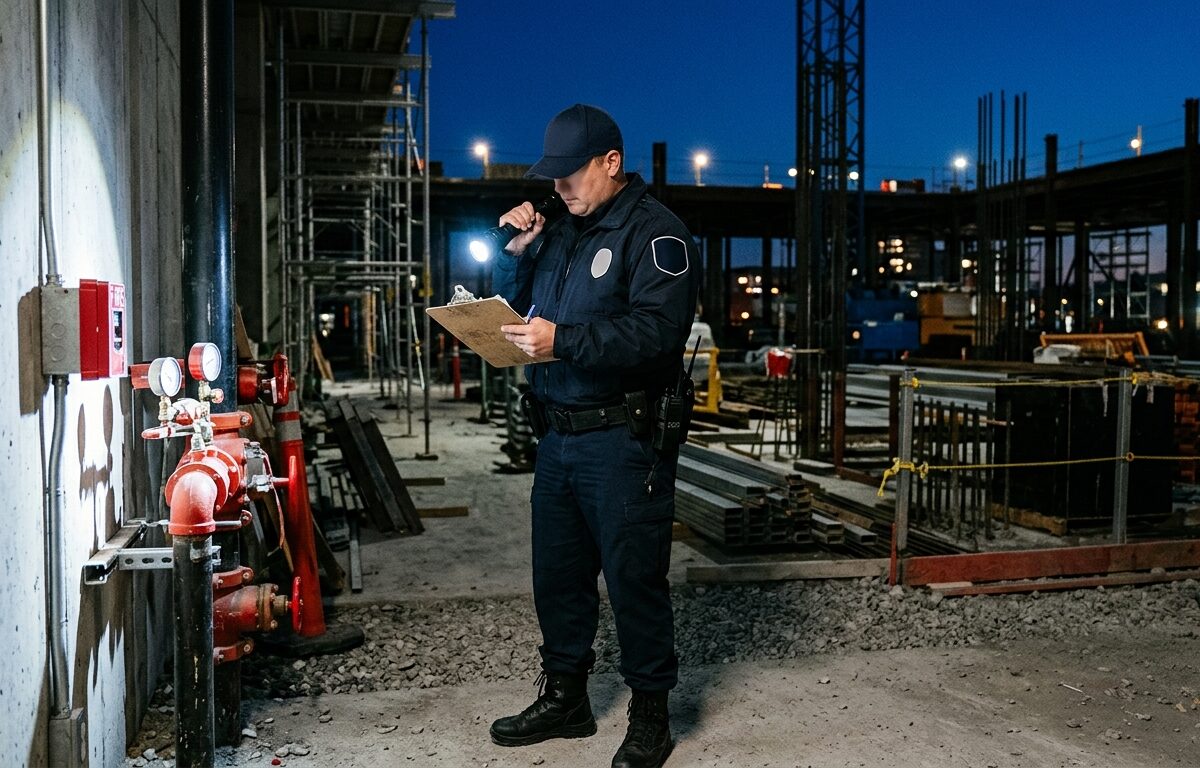
Most of the school security calls we get in the Tampa Bay area don't start with a dramatic incident. They start with something smaller: a side door that's been propped open with a rock since August, a visitor sign-in sheet nobody actually checks against ID, or a front office that can't see who's at the buzzer before letting them in. Access control is the unglamorous part of school security, and it's also the part that actually gets tested every single day.
This is meant as an operational guide, not a threat briefing. The goal of access control at a school isn't to turn a campus into a checkpoint. It's to make sure the people who are supposed to be on site are the only people who can get on site, and that everyone involved, from the front desk to the guard on duty, knows exactly what to check and when.
What Access Control Actually Means for a Florida School
Access control is the set of physical and procedural rules that govern who can enter a campus, when, and through which door. For most K-12 campuses in Florida, that comes down to a few core pieces:
- A single, monitored point of entry during instructional hours, with every other exterior door locked from the outside.
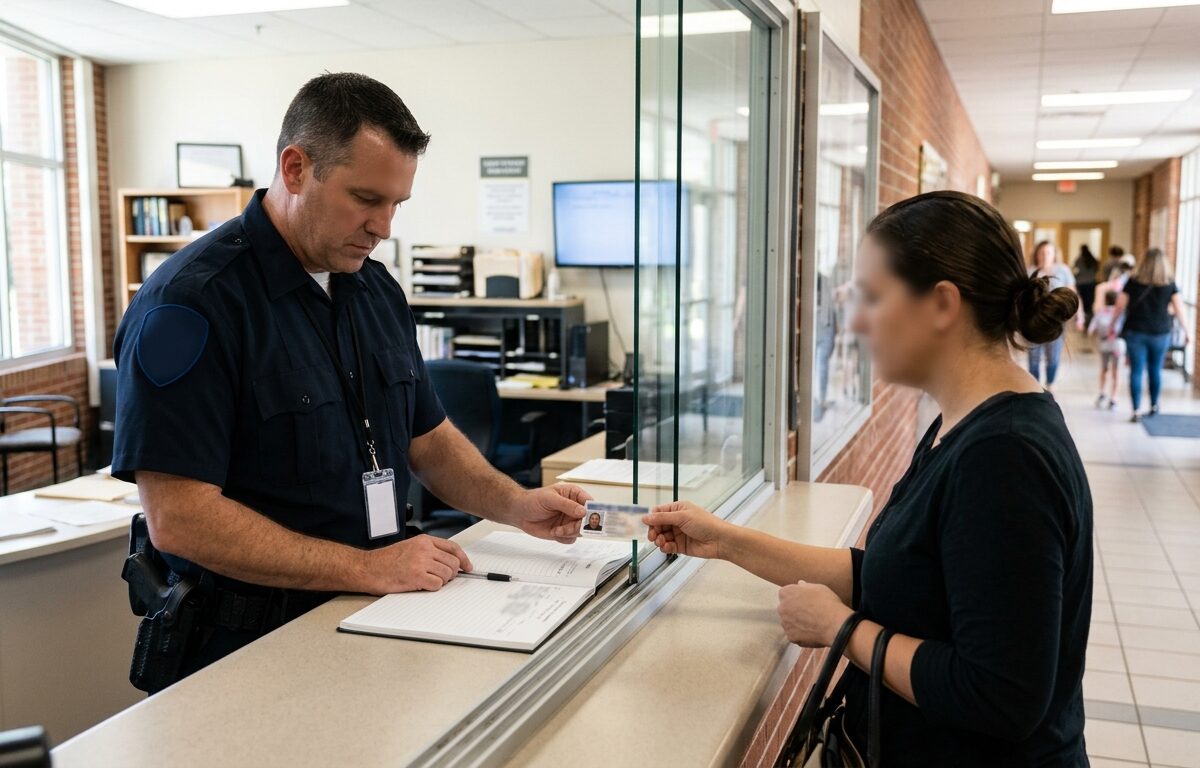
- Visitor sign-in tied to ID verification, not just a name written on a clipboard. A written log is only useful if someone is actually checking it against a photo ID.
- Badging or a visible credential for anyone on campus past the front office, so staff can tell at a glance whether someone belongs in a hallway.
- A buzz-in or intercom system at the main entrance that lets front-office staff see and hear a visitor before the door unlocks.
- A defined process for propped or malfunctioning doors, since a locked door that gets propped open for convenience isn't providing any access control at all.
None of this requires new construction. Most of it is a mix of consistent daily habits and a licensed guard presence to enforce them when staff are pulled in a dozen directions at once, which on any given school day is most of the time.
Drop-off and Pickup: The Riskiest Twenty Minutes of the Day
If a Florida school has an access control gap, it's most likely to show up during drop-off and pickup, not during the quiet middle of the school day. Both windows involve a large number of vehicles, a compressed timeframe, and staff who are simultaneously directing traffic, checking IDs, and managing student movement.
A few things we see work well:
- A verified pickup list, checked against photo ID for anyone picking up a student who isn't on the routine list.
- A single, clearly marked pickup lane with staff or a guard positioned to control vehicle flow, rather than students crossing between moving cars.
- A visible uniformed presence at the pickup and drop-off zone specifically, since this is also when the campus is most exposed to outside traffic and pedestrians who have no reason to be there.
None of this needs to be framed around worst-case scenarios to matter. Unauthorized pickup situations and traffic-related close calls are the realistic, everyday risks this window creates, and they're the ones a security plan should be built around first.
Staff Training and Visitor Protocol
Access control breaks down fastest when the people enforcing it don't have a clear, simple protocol to follow. Training for front-office staff and on-site security should cover:
- What "authorized visitor" actually means at that campus, including who has standing authority to override the sign-in process (and confirming that list is short).
- How to handle a visitor who refuses to sign in or show ID, including who staff call and what they do in the meantime.
- Recognizing tailgating, meaning someone following an authorized person through a locked door without badging in themselves.
- A consistent process for reporting propped doors, broken locks, or malfunctioning buzzers, so small physical gaps get fixed instead of becoming routine.
A licensed guard on site adds value here specifically because enforcement is consistent. Front-office staff have a dozen other responsibilities competing for their attention during the exact hours access control matters most.
After-Hours and Event Access Is a Different Problem
Access control that works during the regular school day often falls apart the moment a campus hosts an evening event: a sports game, a play, a PTA meeting, or an after-school program running past normal staff hours. The single point of entry that works at 8 a.m. usually isn't the right setup for a Friday night football game with parking lot traffic and a gate on the opposite side of campus.
A few things worth planning for separately from the daytime routine:
- A different, event-specific entry point with its own staffing plan, rather than assuming the daytime front-office process still applies.
- Coverage for parking areas and building perimeters during evening events, when the campus footprint being used is often larger than the daytime routine covers.
- A clear handoff between whoever is responsible for the building during the school day and whoever is responsible once an event starts, so there isn't a gap where no one is actually monitoring access.
Treating after-hours and event access as its own plan, rather than an extension of the daytime routine, closes one of the more common gaps we see on Florida campuses.
Where a Threat and Vulnerability Assessment Fits In
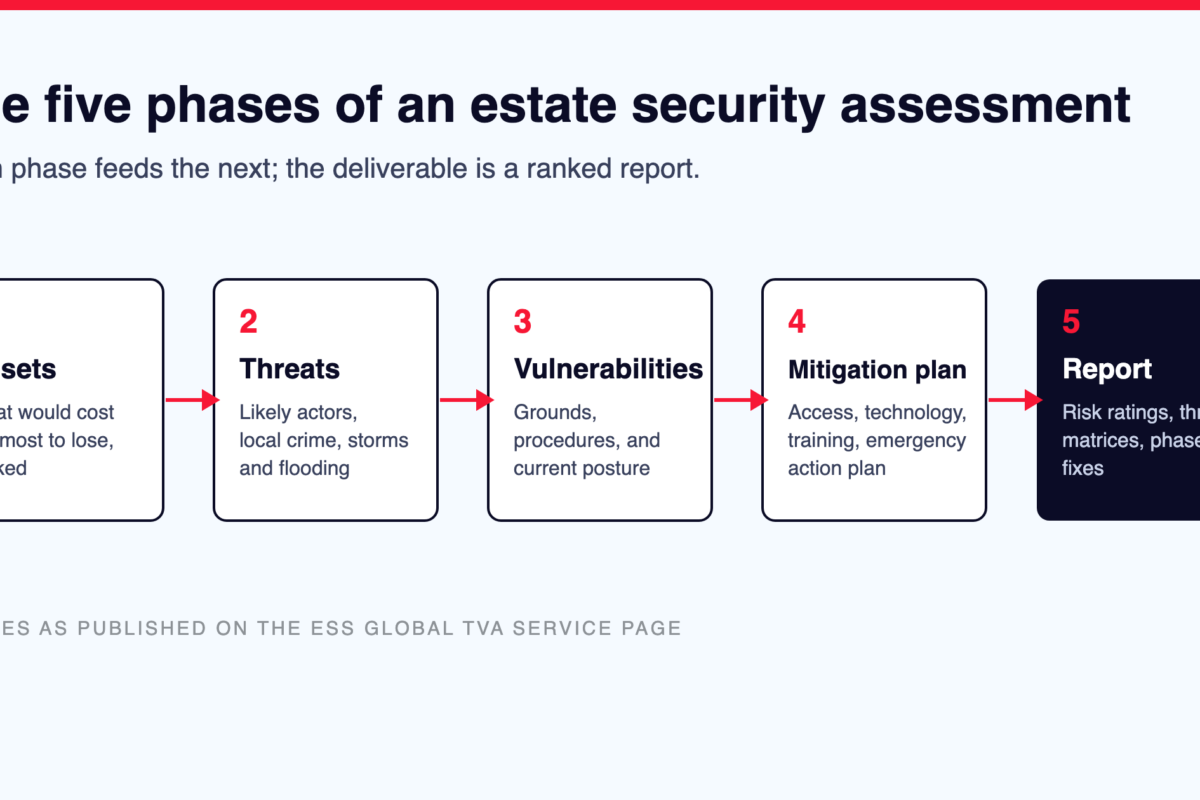
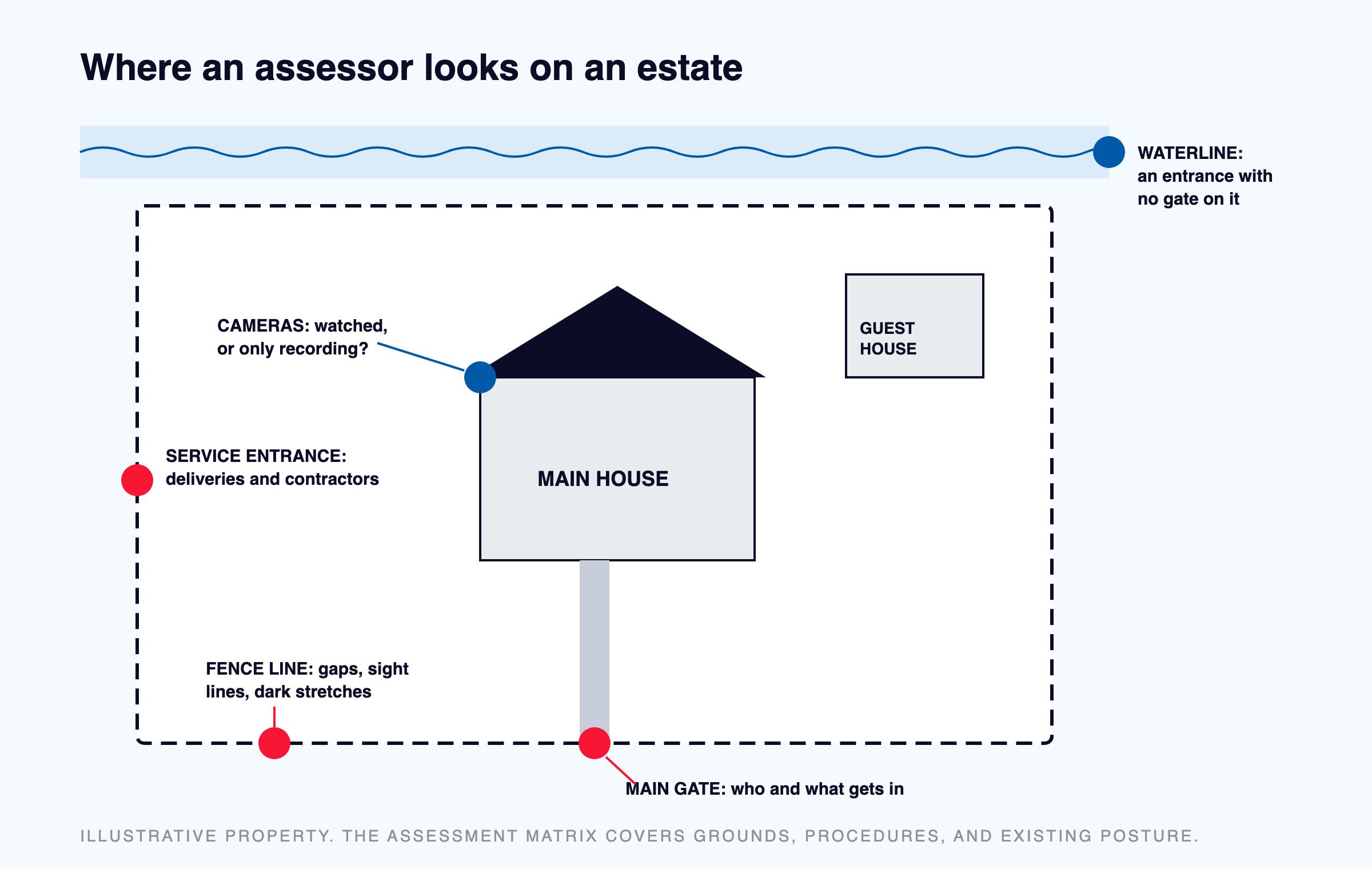
Every campus has a different layout, a different number of entry points, and a different set of daily routines, which means a generic access control checklist only goes so far. A Threat & Vulnerability Assessment is a structured, documented walkthrough that maps a specific campus: every exterior door, every sightline gap, every point where the daily routine creates an opening that a checklist alone wouldn't catch.
The output is a prioritized list, not a sales pitch: what to fix immediately at low cost, what to plan for over a budget cycle, and where staffed guard coverage or camera upgrades actually belong based on the campus's specific layout rather than a generic package.
Choosing a School Security Provider in Florida
A few questions worth asking before hiring anyone to provide access control support or guard coverage at a school:
- Are they a licensed, insured Florida security agency, not an individual moonlighting or an alarm company adding guards as a side offering?
- Do guards assigned to school campuses get training specific to that environment, including visitor protocol and how to work alongside front-office staff, or is it the same generic post orders used for a retail site?
- Is documentation part of the service? Incident logs, visitor exceptions, and daily patrol notes should be written and retained, not just verbal.
- Can they scale coverage for events, half-days, or after-school programs when the campus's normal access control routine doesn't apply?
ESS Global is a licensed, insured Florida security agency (license B 1200075) providing guard staffing and school security support across the Tampa Bay area, built around each campus's actual layout and daily routine rather than a one-size-fits-all post order.
Get a Campus Access Control Review
If it's been a while since anyone looked at your campus's entry points, visitor process, and drop-off routine as one connected system, that's usually the sign it's time. Call ESS Global at 727-940-7926 or request a Threat & Vulnerability Assessment to get a written, prioritized look at where your campus's access control actually stands.