
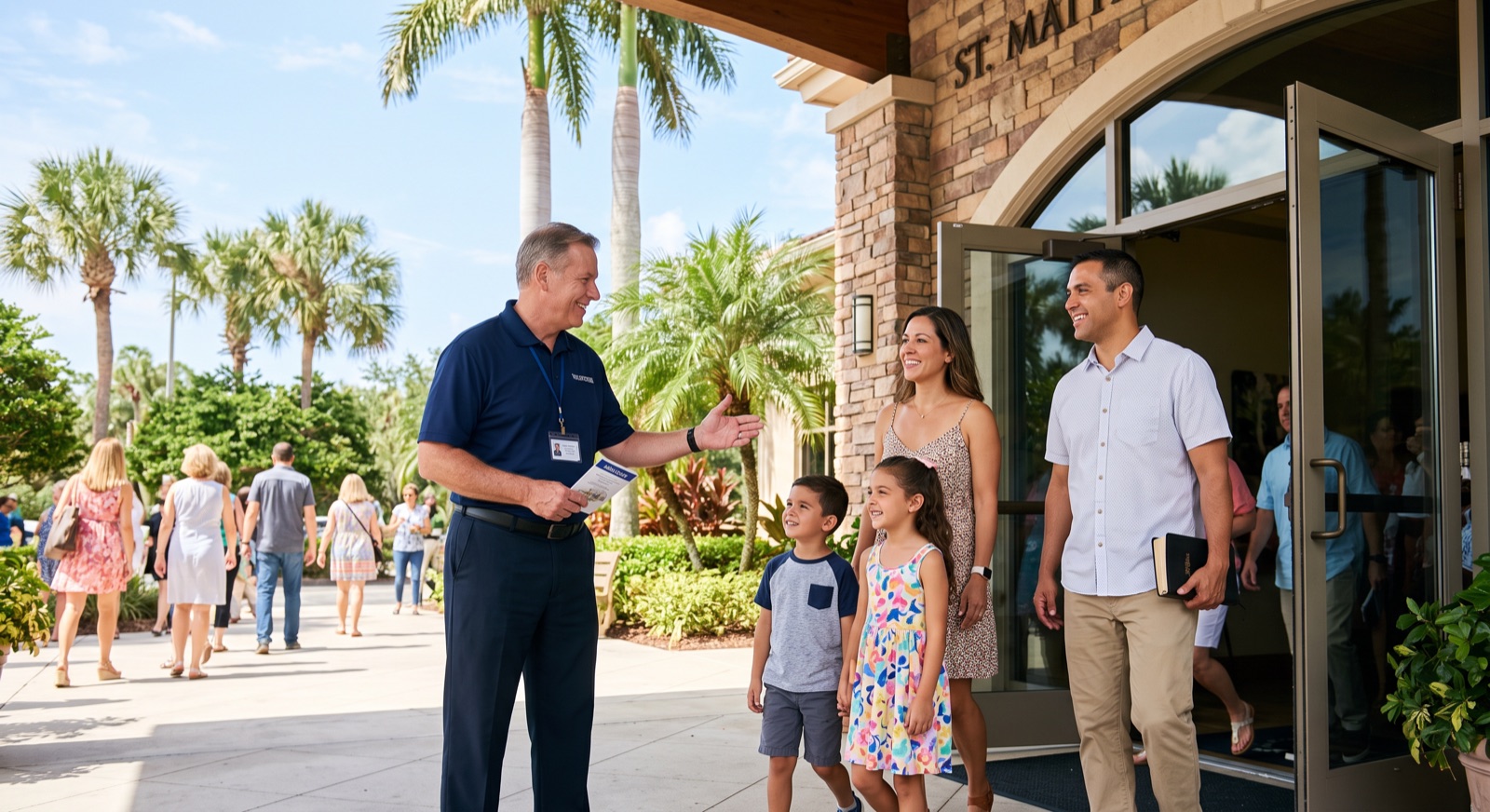
A church is supposed to feel open. That is the whole point, and it is also why church security is harder than securing an office or a warehouse. The goal is not to make a congregation feel watched. It is to make sure the people running the service, from the pastor to the nursery volunteers, know what their role is and what to do if something comes up.
This guide is for church leaders in Florida who want a practical starting point. It focuses on planning and routine, not on worst-case scenarios, because the churches that handle problems well are usually the ones that prepared calmly long before anything happened.
Start With How Your Church Actually Runs
Every congregation has a different rhythm. A small neighborhood church with one Sunday service has very different needs than a multi-campus church with children's programs, weekday events, and a large parking lot. Before you buy anything or hire anyone, write down how a normal week works:
- When the building is open, including services, rehearsals, youth nights, and weekday programs.
- Who is on site at each of those times, and who is responsible for the building.
- Where people come and go: main doors, side entrances, the nursery, the office, and the parking areas.
- What is unique to your church, such as a school on campus, a food pantry, or a bookstore with cash on hand.
Most gaps show up when you compare this list against who is actually paying attention to each area.
The Core Pieces of a Church Security Plan
A workable plan for most congregations comes down to a handful of pieces.
Welcoming, visible entrances
Greeters are your first layer. A friendly person at each main door sees who is arriving, notices anyone who seems out of place, and does it in a way that feels like hospitality. Train greeters on what to notice and who to tell, without turning them into guards.
A defined team with clear roles
A volunteer safety team works best when everyone knows their position and who leads. Decide who watches the sanctuary, who covers the parking lot, who is near the children's areas, and who is the point of contact if something needs attention. Written roles beat good intentions.
Children's areas
Check-in and check-out for nursery and children's programs is one of the most valuable routines a church can have. Matching a child to an authorized adult, every time, protects families and protects your volunteers.
Parking lot and grounds
Many church incidents involve vehicles and parking, not the sanctuary. Lighting, a visible presence before and after services, and attention to cars during the busiest arrival and departure windows all matter. In Florida, afternoon heat and storm season also bring their own considerations for people on the grounds.
A communication plan
Decide how the team talks to each other during a service. Some churches use radios, some use earpieces, some use a simple group text. The tool matters less than the habit: everyone knows how to reach the team lead quickly and quietly.
A response plan for staff
Every church should have a simple written plan for the situations a congregation might face, such as a medical emergency, a disruptive person, a lost child, severe weather, or a fire. Cover where people go, who calls 911, and who stays with whom. Practice it once a year, and keep the drill calm and brief.
Volunteers, Off-Duty Officers, or a Licensed Agency
Most churches use some mix of these three, and the right blend depends on size and budget.
- Volunteer teams are the backbone of most church security. They know the congregation and cost nothing to staff, but they need training, clear roles, and a leader, and they should not be expected to carry more than they signed up for.
- Off-duty officers can add a visible presence on busy days, though availability and consistency vary week to week.
- A licensed security agency provides trained, insured officers on a schedule, which helps for large services, holidays, and special events. It also takes the pressure off volunteers who would rather be worshipping.
Whichever mix you choose, confirm that any paid provider is a licensed, insured Florida security agency, and that armed coverage, if you choose it, is handled by properly licensed officers. Your church insurer may also have opinions, so it is worth a call before you decide.
Training Matters More Than Equipment
It is tempting to start with cameras and door hardware. Those can help, but a plan nobody has practiced tends to fail exactly when it is needed. Training a volunteer team on positions, communication, and a few basic responses does more for a church than a shelf of equipment.
Good training covers:
- How to read a room and spot someone who needs help or attention
- How to approach a person calmly and respectfully
- Where the exits are and who leads people to them
- Basic first aid and how to handle a medical situation until help arrives
- When to call 911 and what to say
Training should feel like part of ministry, not a departure from it.
Balance Safety and Welcome
Florida congregations also have a few local factors to fold in: large parking lots that fill quickly, outdoor events during warm months, and the hurricane season calendar, which is worth building into your response plan alongside everything else.
The best church security is nearly invisible to a first-time visitor. They see friendly greeters and a well-organized building. Behind the scenes, a team is paying attention and knows what to do.
If your plan makes visitors feel interrogated, adjust it. If your team is uncomfortable or unsure, that is a sign they need clearer roles and a bit more practice, not more equipment.
A Simple Checklist to Start
If you are not sure where to begin, start here:
- Walk the building and grounds during a service and note every entrance.
- Write down who covers each area, and where no one does.
- Check children's check-in and check-out procedures.
- Confirm lighting in the parking lot and at exterior doors.
- Decide how the team communicates during a service.
- Write a short response plan and share it with staff and team leads.
- Schedule a training session and a yearly review.
How ESS Global Helps
ESS Global is a licensed, insured Florida security agency. Our church security work includes training a church's existing staff and volunteers and putting together a security plan tailored to the building and the way the congregation meets. For churches that want to understand their gaps first, a threat and vulnerability assessment gives you a written, prioritized look at your site. We also provide security guard services for larger services and events.
Talk Through Your Church's Plan
If you would like a second set of eyes on your church's plan, call ESS Global at 727-940-7926 or request a quote.